


To listen to an audio version, click the link.
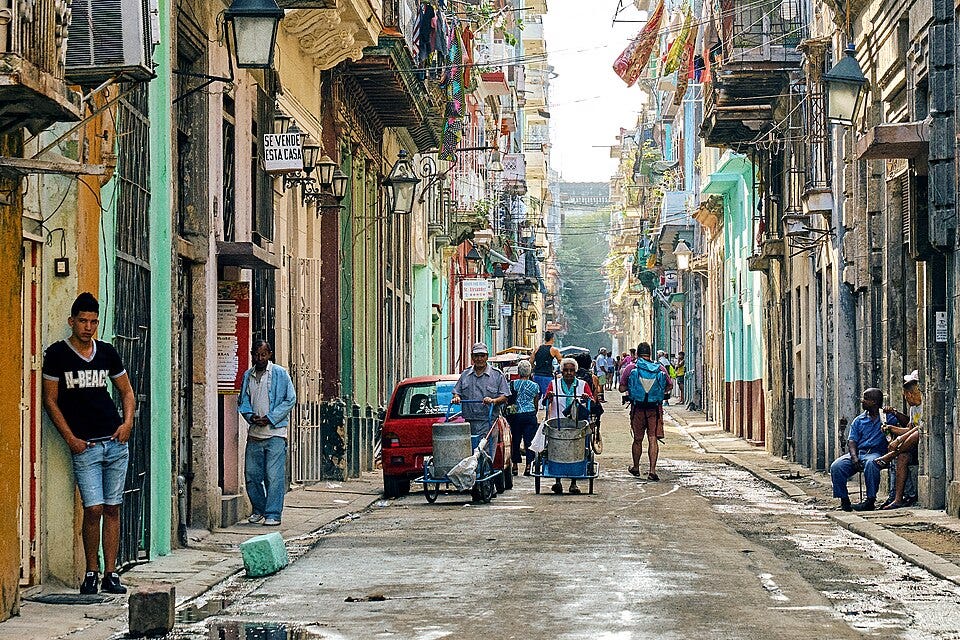
We recently published an article in National Interest about U.S. national strategy for regime change in Cuba, with a comparison to recent events in Venezuela. You can find it here.
Cigars, Crude, and Communism
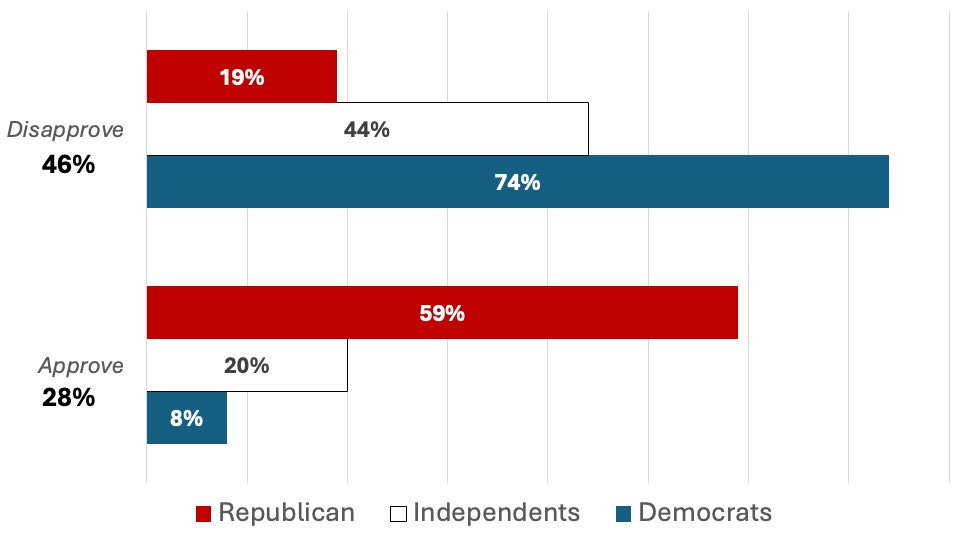
The United States, under Secretary of State Marco Rubio, is pursuing a maximum pressure campaign against Cuba to instigate regime change. Rubio released a video on 21 May attacking Cuba’s communist leadership and labeling the country as a national security threat. President Trump has suggested the possibility of military action. While this approach may be popular among certain groups in Florida, a YouGov poll shows that most Americans disapprove of both the oil embargo and military intervention, with 61% opposing military action.
The international community is divided on U. S. policy in Cuba. The UN has repeatedly voted against the U. S. embargo, with 165 votes to end it, seven against, and twelve abstentions in October 2025. Russia and China oppose the U. S. due to their rivalry, not for significant benefits in Cuba.
Argentina and Paraguay have changed their votes in the United Nations to support U. S. policy in 2024, while Ecuador chose to abstain, showing some Latin American support for Trump administration policies. However, prominent countries like Brazil, Colombia, and Mexico oppose U. S. policy. Spain, Brazil, and Mexico called for urgent action to address Cuba’s humanitarian crisis, blaming U. S. actions for this issue. Some are comparing U.S. strategy as the same used on Venezuela.
A Comparative Analysis
Cuba and Venezuela have similar histories and politics, both fighting for independence from Spain in the 19th century. They share cultural ties in religion, language, and ethnicities and have both faced recent communist regimes. Fidel Castro took control in Cuba in 1959, followed by Hugo Chavez in Venezuela in 1999. While initially popular, their rule turned into oppressive dictatorships due to the failure of communist policies, leading to poverty and repression. This resulted in large migrations, with 1.67 million Cubans moving to the U. S. and around 8 million Venezuelans, mostly going to Colombia and Peru.
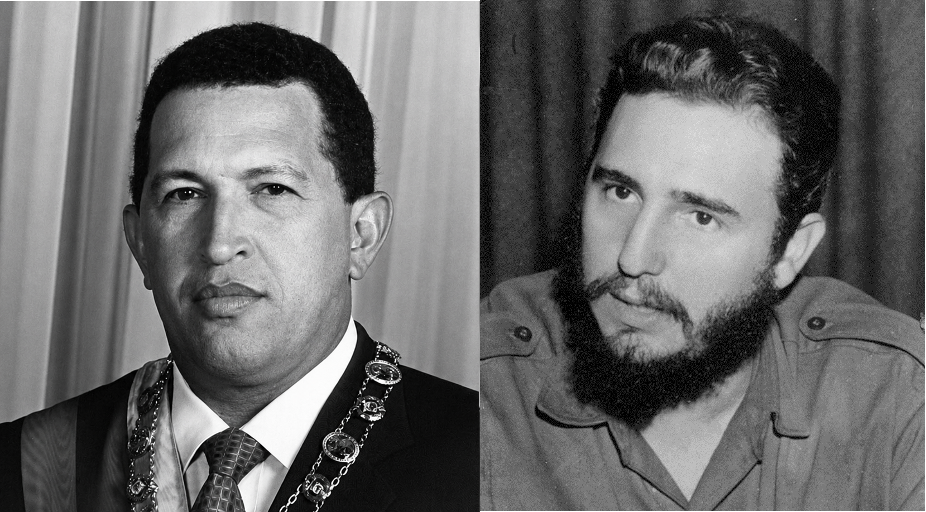
Despite some similarities, Venezuela and Cuba differ significantly in resources and economic chances. Venezuela has a higher GDP and better natural resource development potential. In 2010, Venezuela’s GDP was $316B compared to Cuba’s $69B. Venezuela may benefit from U. S. investment, while Cuba’s economy would likely stay focused on tourism and agriculture.
The resilience of the Cuban regime is significantly different from that of Venezuela. Research shows that in 2025, Venezuela has a resiliency score of only . 147, lower than Haiti’s . 165. In contrast, Cuba has a score of . 415, similar to Mexico’s . 436. This difference mainly comes from Cuba’s enforcement of the rule of law, while Venezuela under Nicolás Maduro suffers from high corruption and support for transnational crime. The data clearly indicates that these two countries are not comparable.
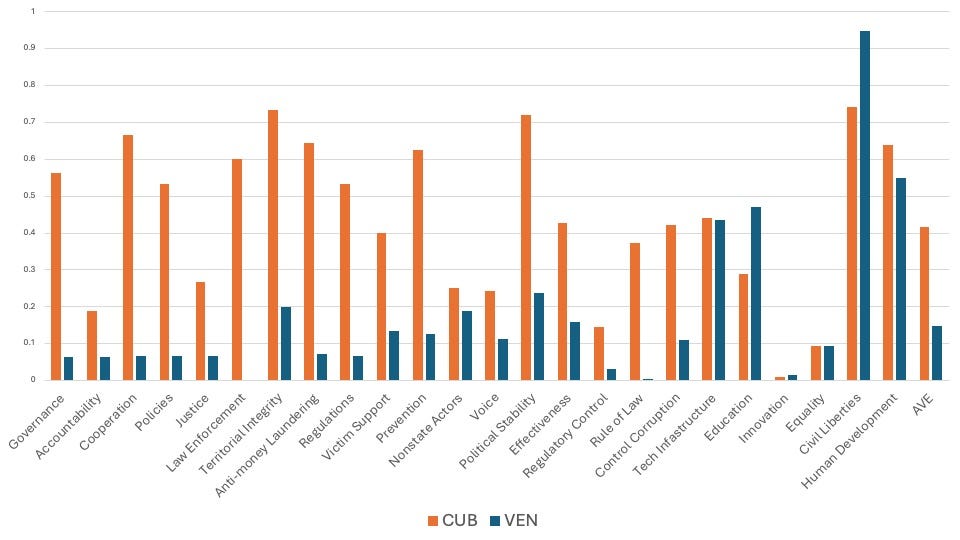
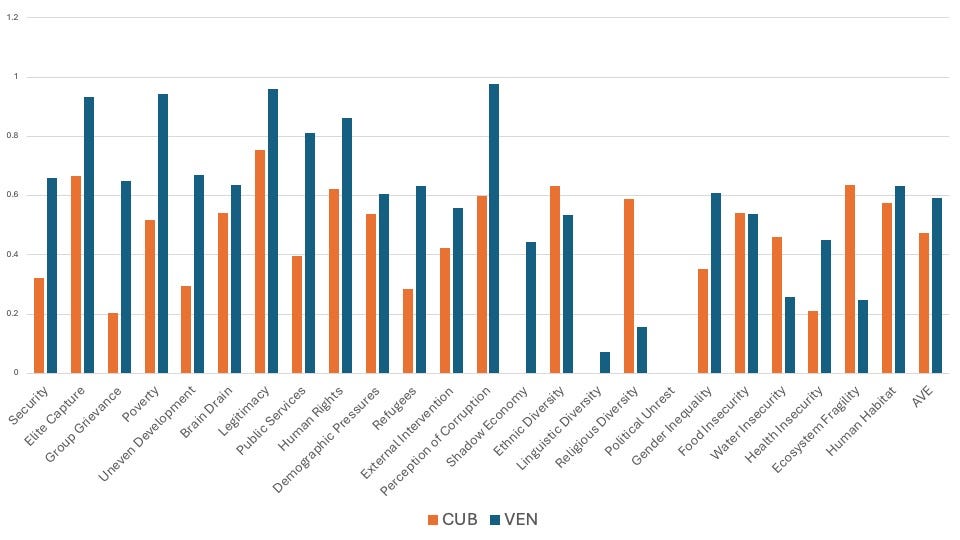
A comparison of the resistance environment in Cuba and Venezuela shows clear differences. Venezuela has a higher resistance energy at . 593, compared to Cuba’s . 473. This reflects significant issues in Venezuela, like higher personal insecurity and less effective health care, while Cuba offers better universal health care. The main difference lies in organized resistance. In Venezuela, Maria Corina Machado and her Vente party lead centralized efforts for change. In contrast, Cuba has suppressed all forms of resistance through extensive surveillance and intelligence, resulting in minimal domestic opposition.
Paths of Regime Change
The U. S. State Department claims that the Cuban military controls the government through GAESA, a company managing large illicit assets. On May 7, Rubio sanctioned GAESA for its control over $20 billion. From April to May, the Department of Justice indicted five Cuban leaders, including Raul Castro, for conspiracy to kill U. S. nationals in 1996, similar to the bounty on Nicolas Maduro.
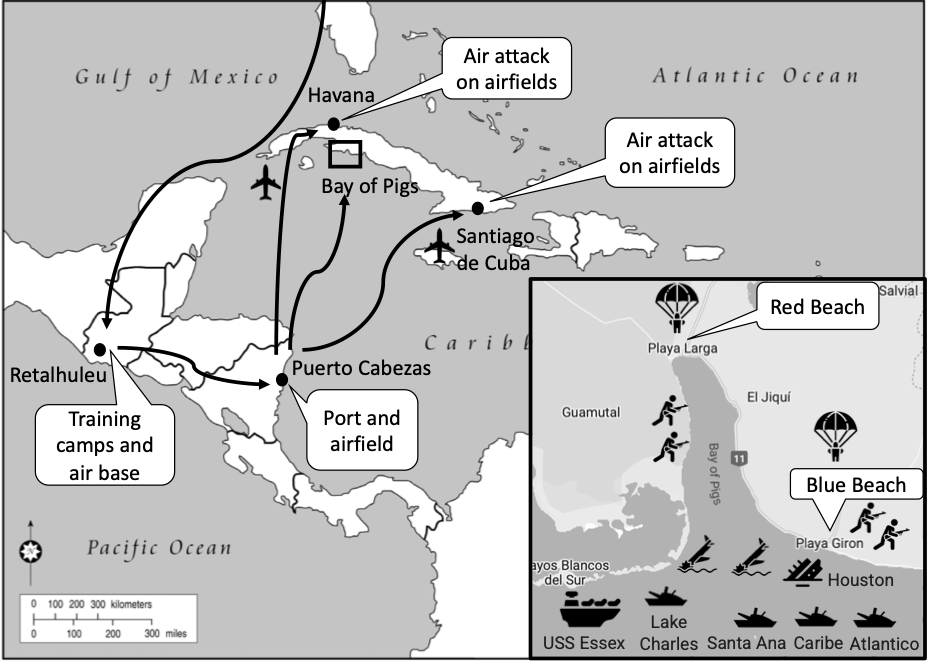
The Trump administration is not seriously considering a conventional military invasion to overthrow the current regime. The U. S. used a military approach against Fidel Castro in 1961, known as the Bay of Pigs Invasion, which failed and only served to strengthen Castro’s rule. This failure also led to closer ties between Castro and the Soviet Union, and subsequently increased nuclear war risks. Given the past historical lessons, combined with the Trump administration’s struggles with the 2026 Iran War, a military solution is very unlikely.
The U. S. Government, led by Rubio, is using a strategy similar to its approach against Venezuela’s Maduro regime to push for change in Cuba. This strategy involves legal actions, political isolation, and economic pressure, including a military-enforced energy blockade. Unlike in Venezuela, where Delcy Rodriguez supported U. S. policies, Cuba lacks a comparable leader. On May 14, CIA Director John Ratcliffe visited Cuba to meet with leaders about Trump’s demands, and also most likely to seek potential allies within the regime.
The Final Tally
The United States, through its Southern Command and other agencies, appears to be following a strategy similar to its previous attempts at regime change in Venezuela. However, the situations in Cuba and Venezuela are not the same, and Cuba’s response to U. S. strategies may differ. Regime change in Cuba will likely require strong domestic opposition, which is currently lacking. While the decline of the Cuban regime’s legitimacy and economic struggles might lead to gradual changes, it is uncertain who will lead those changes. A shift toward capitalist economies friendly to the U.S. could happen over time, but it may also be influenced by internal power shifts among Cuban elites. In the short term, U. S. policies might encourage Cuban defiance, reminiscent of past events like the Bay of Pigs.
For the full article in National Interest, click here.
What are your thoughts?
Is the data compelling?
Join the conversation!


