


To hear this article, click the link.
In 2024, we predicted these U.S. engagements in Venezuela and Iran.
You can read the 2024 article we wrote here.
Looking back and forward, our latest article in National Interest (which you can access here) reassesses what we got right, what we didn’t anticipate, and what might happen next.
We revisit our earlier prediction that the nomination of Marco Rubio as Secretary of State would ensure support for regime change in Venezuela, Iran, and, ultimately, a change in the behavior of the Chinese Communist Party.
This 2024 prediction, thus far, has proven largely accurate.
We predicted that Washington would first target regime change in Venezuela through “covert and overt operations,” followed by efforts to support domestic resistance movements in Iran.
According to our analysis, the U.S. strategy toward Venezuela unfolded largely as expected, though with a greater level of overt military force than predicted, ultimately contributing to the collapse of the regime of Nicolás Maduro. In Iran, the administration responded to mass protests in late 2025 by signaling support for demonstrators after the regime violently repressed them.
Because both countries are major oil exporters whose sales often flow to China to bypass sanctions, the United States could gain geopolitical leverage by influencing their energy exports or political leadership. However, Iran’s oil exports are far more significant to China, meaning any disruption could intensify strategic tensions between Washington and Beijing.
The article concludes that if political change occurs in Iran, alongside earlier shifts in Venezuela and the fall of Bashar al-Assad in Syria, the United States would now be freed from many regional confrontations and could concentrate more directly on long-term competition with China and Russia.
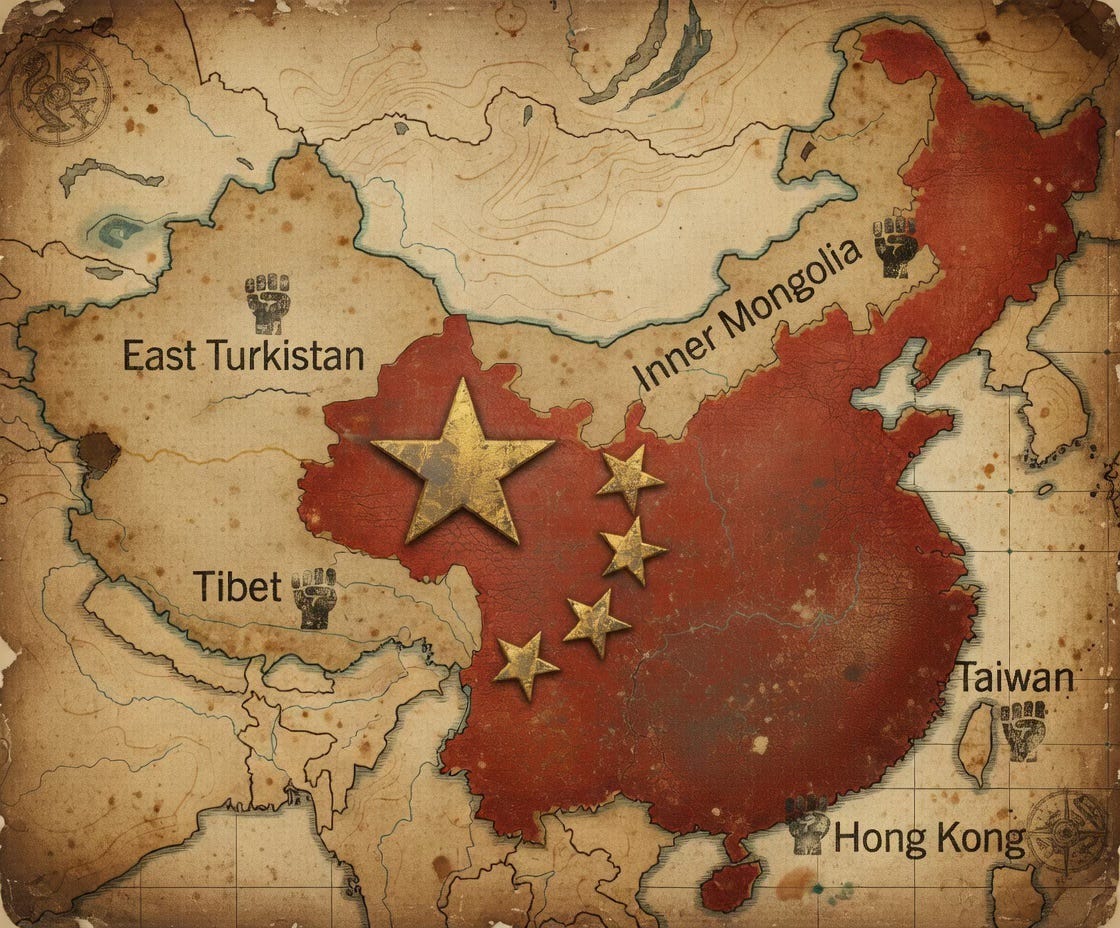
Moving forward, if the gamble on Iran pays off, we predict that Washington will renew support and attention to resistance movements in China, including those in Taiwan, Tibet, Xinjiang Uyghur Autonomous Region (East Turkistan), Inner Mongolia, and Hong Kong (see Figure 1).
Rather than direct military confrontation with China, however, we expect the strategy to rely on political pressure and an information campaign which focuses on human-rights advocacy.
Again, if you want to read our latest prediction, click here.
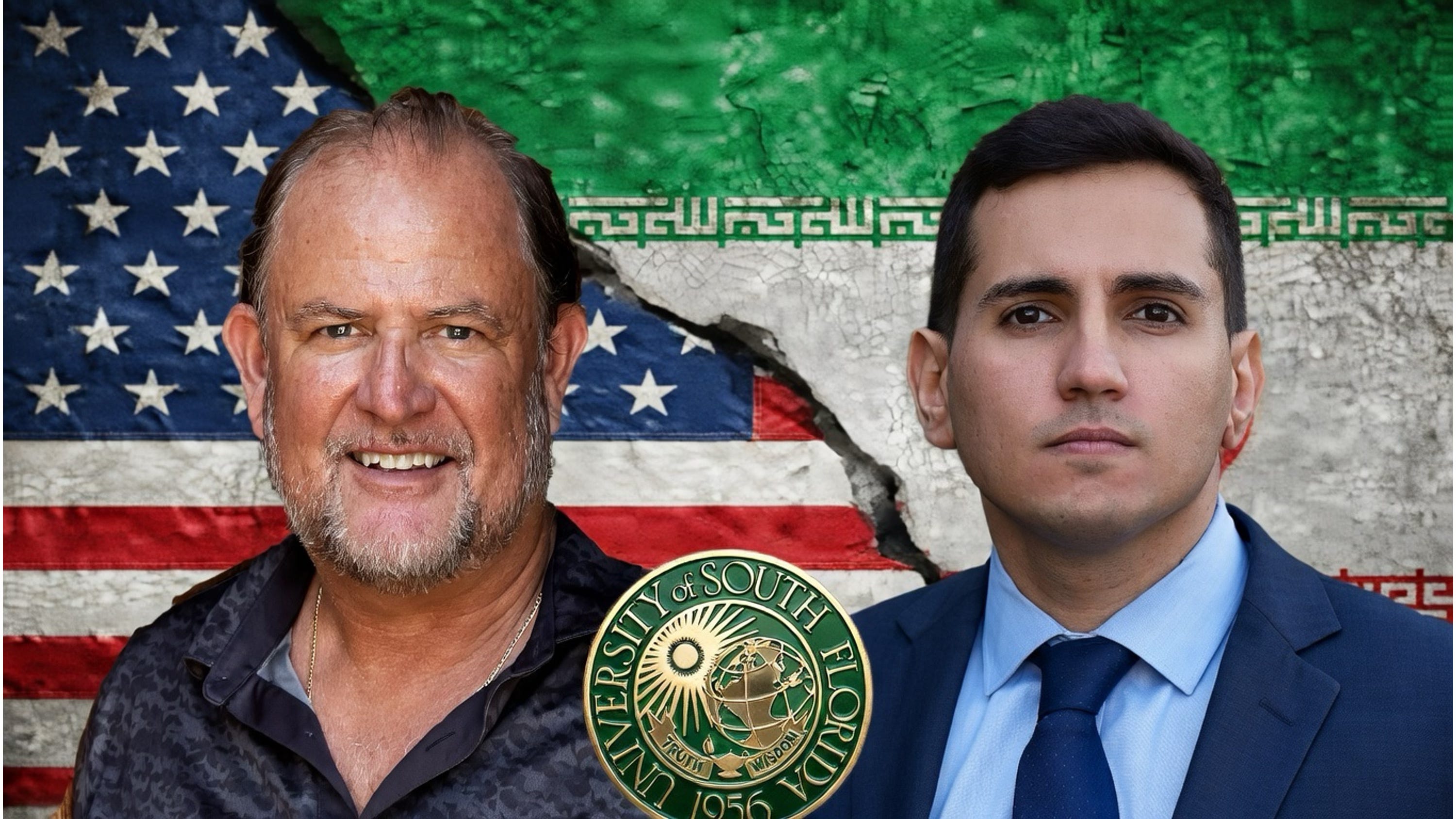
Dr. Robert Burrell is a senior research fellow with the Global and National Security Institute at the University of South Florida. From 2020 to 2024, he taught irregular warfare at the Joint Special Operations University, and earlier served as US Special Operations Command’s Editor-in-Chief for irregular warfare doctrine. He is also an advisor to the special operations program in the Irregular Warfare Initiative. A retired Marine with multiple combat tours, Dr. Burrell has spent 12 years living and working across Japan, Korea, the Philippines, and Thailand, plus a diplomatic tour at the US Embassy in Australia. He holds a PhD in History from the University of Warwick, and master’s degrees from San Diego State University and the US Naval War College. Follow him on LinkedIn and X@iwojima0
Dr. Arman Mahmoudian is a research fellow at the USF Global and National Security Institute. He is also an adjunct professor at the University of South Florida’s Judy Genshaft Honors College, teaching courses on Russia, the Middle East, and International Security. He holds a PhD in Politics and International Affairs from the University of South Florida. He earned his Master’s in International Relations in Russia and his Bachelor’s in Law in Iran. In addition to his professional roles and publications, he is a member of the editorial board at the Joint Special Operations University. His research and commentary on Middle Eastern and Russian affairs have been featured in leading outlets, including Foreign Policy, The National Interest, the Stimson Center, the Atlantic Council, the Gulf International Forum, and other platforms. Follow him on LinkedIn and X @MahmoudianArman.


